7v7 Formations That Make Sense for Recreational Teams
Most recreational soccer teams don't spend their week practicing formations. They're usually more concerned with figuring out who's showing up, whether they have enough substitutes, and who's going to play goalkeeper this time.
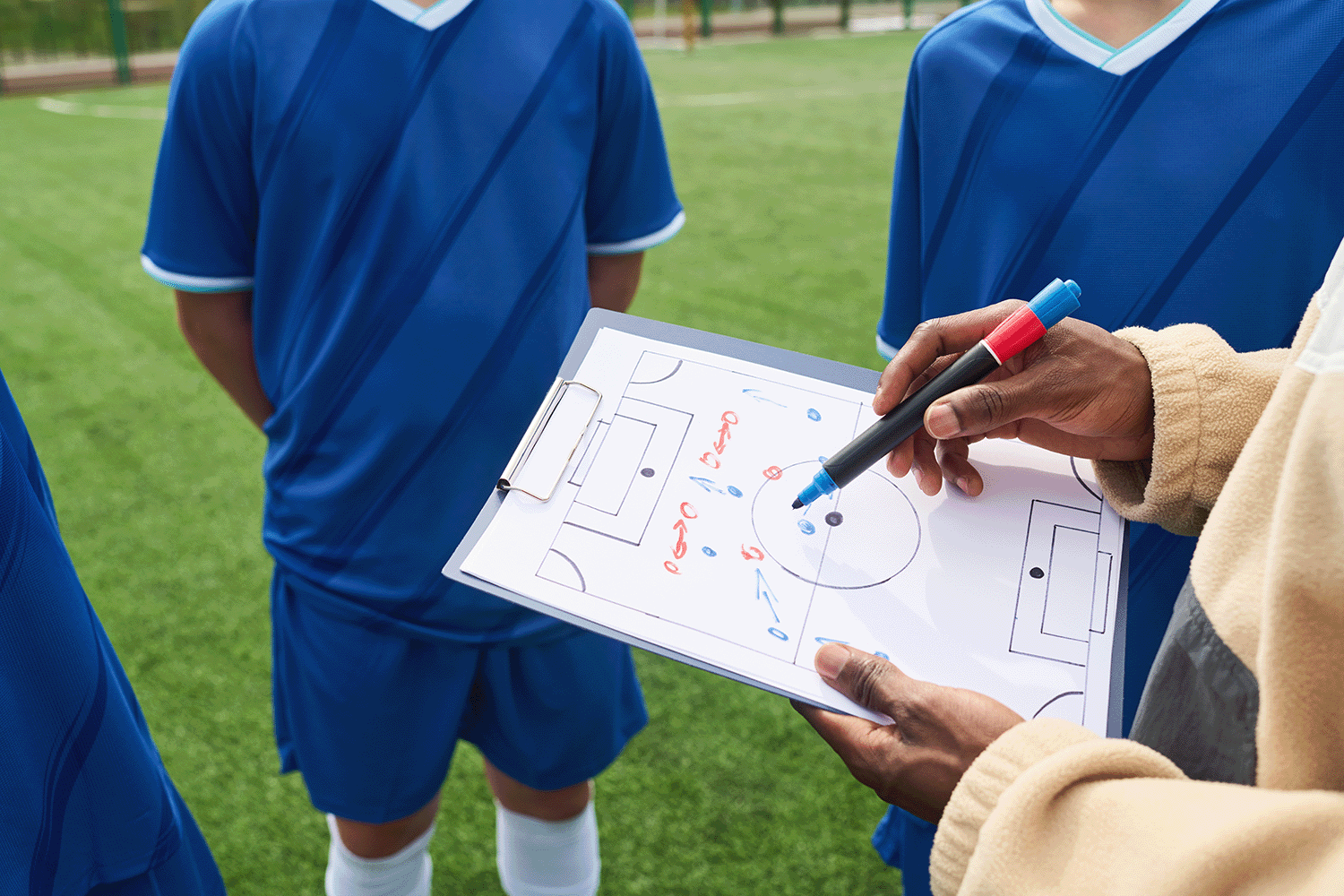
Still, there's a big difference between a team that has a basic idea of where everyone should be and one that's figuring it out every time the ball changes possession.
In 7v7, that difference can show up pretty quickly. There are fewer players to cover the field, more space to exploit, and not much room for confusion when somebody gets caught out of position.
The good news is that your team doesn't need a complicated tactical system to stay organized. A simple formation, a little communication, and a willingness to help each other out can go a long way.
Here are three 7v7 formations worth trying, along with some advice on making them work for a recreational team.
Optional first captionOptional second caption
First, How Do 7v7 Formations Work?
In 7v7 soccer, each team has six outfield players and a goalkeeper. The numbers used to describe formations refer only to those six outfield players, starting with the defenders and moving toward the forwards.
For example, a 2-3-1 formation means two defenders, three midfielders, and one forward.
Unlike traditional 11v11 soccer, there aren't as many players available to fill specialized roles. Your midfielders may need to cover a lot of ground, your defenders will occasionally find themselves joining the attack, and your forwards have to do some defensive work.
The formation gives everyone a starting point. What matters is how the team moves when it has the ball, loses possession, or needs to cover for a teammate.
1. The 2-3-1: A Good Place to Start
Two defenders | Three midfielders | One forward
The 2-3-1 is a sensible starting point for recreational teams because it provides a relatively balanced shape without asking players to learn anything particularly complicated.
With two defenders at the back, three midfielders across the middle, and one forward leading the attack, the team has options for moving the ball without leaving huge gaps between players.
The three midfielders are especially important. The central midfielder can help connect defense and attack, while the two wider players provide passing options and help stretch the opposition.
When your team loses possession, those wide midfielders need to recover and help out defensively. If they stay too far forward, the two defenders can find themselves dealing with more attackers than they can comfortably handle.
When it works well
The 2-3-1 is particularly useful when your team has players who are comfortable moving between attacking and defensive responsibilities.
It's also a good option if you have one reliable forward who can hold the ball long enough for teammates to join the attack.
Where it can go wrong
The biggest problem tends to be the midfield getting carried away.
If all three midfielders push forward, there may be nobody available to slow down a counterattack. The two defenders suddenly have an awful lot of ground to cover.
The fix doesn't have to be complicated. Make sure at least one midfielder is thinking about defensive cover, particularly when the team is attacking.
Try this: Ask your central midfielder to stay connected to the defenders instead of joining every attack. That gives the team another passing option and someone who can react quickly if possession is lost.
2. The 3-2-1: When You Need a Little More Defensive Help
Three defenders | Two midfielders | One forward
Every recreational team has had one of those matches where it feels like the opposition gets a clear chance every time they win the ball.
If your team regularly struggles with counterattacks, a 3-2-1 might be worth trying.
Adding a third defender gives you more coverage across the back and can make it easier to deal with opponents who move quickly into attacking positions.
It can also take some pressure off individual defenders, especially when the opposition has a couple of particularly quick forwards.
The trade-off is that you've now got only two midfielders and one forward responsible for a significant amount of the attacking work.
When it works well
The 3-2-1 can be useful when facing a stronger attacking team or when your players are still getting comfortable playing together.
It's also a reasonable approach when your team wants to stay compact, defend patiently, and look for opportunities to counterattack.
Where it can go wrong
If the three defenders sit too deep and the midfielders don't push forward when possession changes, your lone striker may spend most of the match waiting for a pass that never comes.
That's not particularly enjoyable for the forward, and it makes attacking much harder than it needs to be.
The solution is to avoid treating the three defenders as a permanent wall across the back. When possession is secure, one of the wider defenders can move forward to support the midfield, provided someone covers the space they leave.
Try this: Give one of your midfielders permission to support the striker while the other stays available to cover defensively. It's a simple way to create attacking options without abandoning the formation entirely.
3. The 2-2-2: Keeping Things Simple Up Front
Two defenders | Two midfielders | Two forwards
The 2-2-2 is probably the easiest formation on this list to explain before kickoff.
Two players defend, two operate in midfield, and two play further forward.
Having two forwards gives your team more immediate attacking options. Instead of one player trying to hold up possession alone, there are two players who can combine, make runs, and put pressure on opposing defenders.
For teams with a couple of players who naturally work well together in attack, this setup can be enjoyable.
It does come with some responsibilities elsewhere on the field.
When it works well
The 2-2-2 can suit teams that want to play directly, have two capable attackers, and have midfielders willing to cover plenty of ground.
It also provides a straightforward structure for players who don't want to think too much about complicated positional instructions.
Where it can go wrong
With only two midfielders, there's a risk of getting outnumbered in the middle of the field.
If the forwards stay high and the defenders remain deep, the midfield pair can end up doing most of the running.
That gap between attack and defense is where things tend to fall apart.
The forwards need to help when possession is lost, and at least one should be willing to drop into midfield when the team needs another passing option.
Try this: Have one forward check back toward the ball while the other stays higher. It creates different passing options and makes the team's attack less predictable.
So, Which Formation Should Your Team Actually Use?
There's no single formation that's going to work for every recreational team.
A group with several experienced midfielders might be perfectly comfortable playing a 2-3-1. A newer team that's still learning to defend together might prefer the additional cover offered by a 3-2-1.
And if you've got two forwards who enjoy playing together, a 2-2-2 might make more sense than trying to force one of them into an unfamiliar role.
The players available on a particular night matter, too.
You might normally have someone who organizes the defense, but they're missing this week. Perhaps your usual central midfielder is playing goalkeeper. Or you have a few substitutes who are more comfortable in certain positions.
That's normal for adult recreational soccer.
Rather than forcing everyone into a rigid system, choose a formation that makes sense for the people who actually showed up.
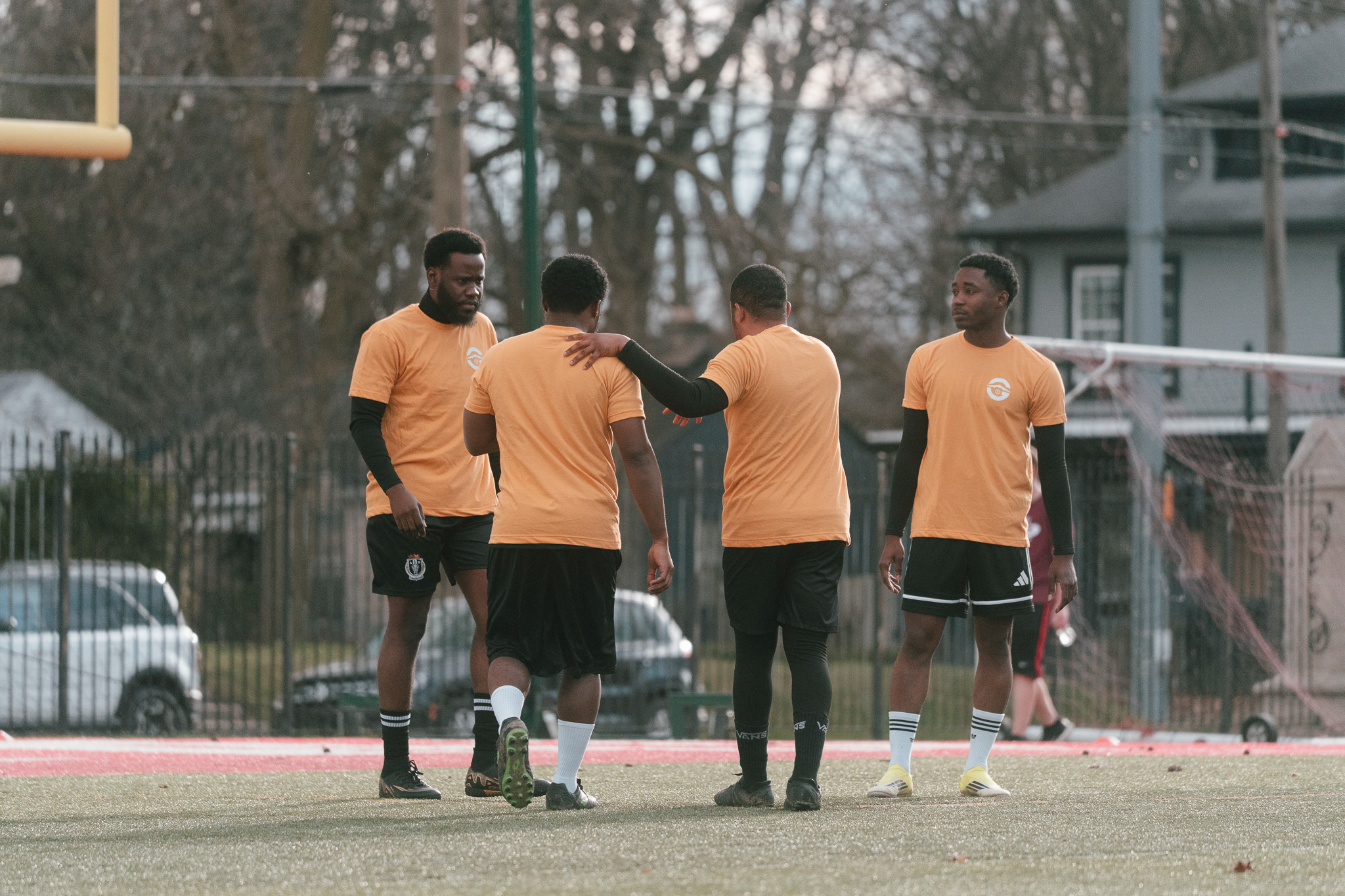
It also helps to agree on a few responsibilities before kickoff. Who stays back when a defender pushes forward? Who covers the middle when the ball goes wide? Who picks up the opposing striker?
Those conversations are often more useful than spending ten minutes debating which formation looks best on paper.
Three Things That Matter More Than Your Formation
Even a well-organized formation won't solve everything. There are a few habits that make recreational teams noticeably easier to play with.
Talk to Each Other
You don't need someone shouting instructions for the entire match, but a little communication helps.
Let teammates know when they have time on the ball, when someone is approaching behind them, or when you need cover.
A quick call can prevent the sort of mistake that usually results in six people looking at each other afterward.
Don't All Chase the Ball
It's tempting to move toward the action, particularly when your team is struggling to win possession.
But if three players rush toward the same opponent, they're usually leaving space somewhere else.
Sometimes the most useful thing you can do is stay in position, block a passing option, or make yourself available for the next pass.
Make Substitutions Count
Gotham's 7v7 format allows unlimited on-the-fly substitutions for outfield players, provided the substitution procedures are followed.
That gives teams an opportunity to keep players fresh without waiting for a long break in play.
Just make sure the incoming player knows where they're playing.
If your central midfielder comes off and their replacement runs straight toward the opposition's goal, you may have created a problem that didn't exist thirty seconds earlier.
A quick conversation at the bench can save a lot of confusion.
A Few Things to Remember About Gotham's 7v7 Rules
Tactics also depend on the rules you're playing under.
In Gotham's 7v7 leagues, offside is not applied. That means defenders need to stay aware of opponents positioning themselves high up the field, even when the rest of the opposition has dropped back.
Slide tackles are also prohibited, so defenders should focus on positioning, staying on their feet, and making controlled challenges.
These details can influence how your team organizes itself, particularly when defending counterattacks or dealing with opponents who leave a forward near your goal.
It's worth reviewing the official Gotham Soccer rules before your next match, especially if you're new to the format.
Find a Shape That Works, Then Play
A good recreational team doesn't have to play perfectly organized soccer.
Players will make mistakes. Someone will forget they're supposed to be defending. Your carefully arranged midfield will occasionally disappear the moment there's a chance to score.
That's part of the game.
The point of having a formation isn't to stop players from expressing themselves or turn a Tuesday night league match into a tactical examination.
It's to give everyone a better idea of how to help each other.
Start with something simple. Try it for a few matches. If your team keeps getting exposed defensively, make an adjustment. If nobody is getting forward, rethink how you're attacking.
And if you find something that works, there's no need to change it just because another formation sounds more impressive.
Looking to get back on the field?
Gotham Soccer offers adult recreational leagues across multiple cities, with opportunities for both established teams and individual players.